


On August 15, 2026, Raleigh police responded to a parking lot off West Martin Street in downtown Raleigh, North Carolina, a few blocks from the CaribMask Caribbean Festival, and found a young Black man hanging from a tree. Officers pronounced him dead at the scene. That night, the department announced that it was investigating the death as a suicide because there appeared to be no foul play. Three days later, Police Chief Rico Boyce told reporters that video from nearby businesses showed what happened, and that the man’s mother asked police to tell the public that her 32-year-old son struggled with mental health problems in the past.
Atlanta Black Star counted the Raleigh death as its seventh confirmed case in the United States in 2026 involving a Black person who died hanging under circumstances the public disputed. Earlier cases included Jerard “Jay” Jackson, 28, who died near Rothbury, Michigan, on June 30, and Tasia Fortune, 29, who died behind a vacant home in Jackson, Mississippi, earlier in August. Officials in each case pointed toward suicide.
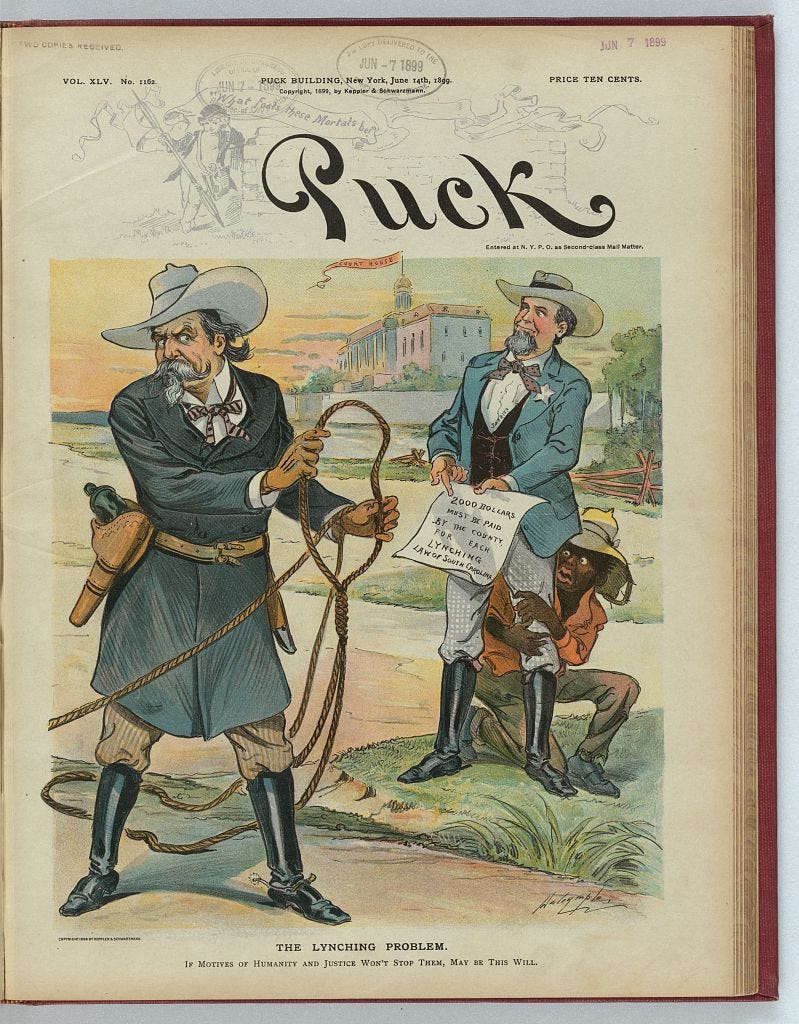
Officials may turn out to be right about any one of these deaths. In several of them, they reached that conclusion before completing the work that would let anyone tell a suicide from a killing, which is the same failure that kept American lynchings out of the official record for eighty years.
I’m fighting to document stories like this before they get dismissed or erased entirely, and I need your help!
With no corporate backing or wealthy sponsors, this work depends entirely on readers like you.
If everyone reading this became a paid subscriber, I could investigate these warning signs full-time, but right now less than 5% of my followers are paid subscribers.
If you believe in journalism that tracks the canaries leaving our coal mine when others look away, please consider a paid subscription today!
Families Questioned the Rulings
On May 8, 2026, Kenneth Tolbert walked his service dog past the grounds of the United House of Prayer for All People on West Sugar Creek Road in north Charlotte and saw what he took for a figure standing still under a tree. Tolbert found 16-year-old Juliana Umba Nzita held upright by a ratchet strap around her neck, the kind of strap drivers use to secure cargo, wrapped twice around a leaning trunk that stood at least twice her height. Her feet rested on the ground beside a toddler-size blue chair. Her family reported her missing ten days earlier.
By that Monday, the county medical examiner ruled the death a suicide. Charlotte-Mecklenburg Police closed the case four days after that. According to a Charlotte Observer investigation, no one performed an autopsy, no one located Nzita’s cell phone, and no investigator interviewed Tolbert, the man who found her. Tolbert, who stands five feet nine inches, told the paper he could not reach the limb himself and could not work out how a girl shorter than him had. Nzita’s uncle, Mathy Nzita, asked why authorities did not investigate further after finding a teenage girl hanging in a public churchyard. Relatives also said Nzita struggled with her mental health and endured severe bullying before she died.
Those two facts sit together uncomfortably, and both belong in the record. A medical examiner who declines to perform an autopsy cannot rule out a homicide, whatever the truth of this particular death turns out to be. The Charlotte-Mecklenburg Community Relations Committee, a 45-member advisory body, was still asking police for answers in late July.
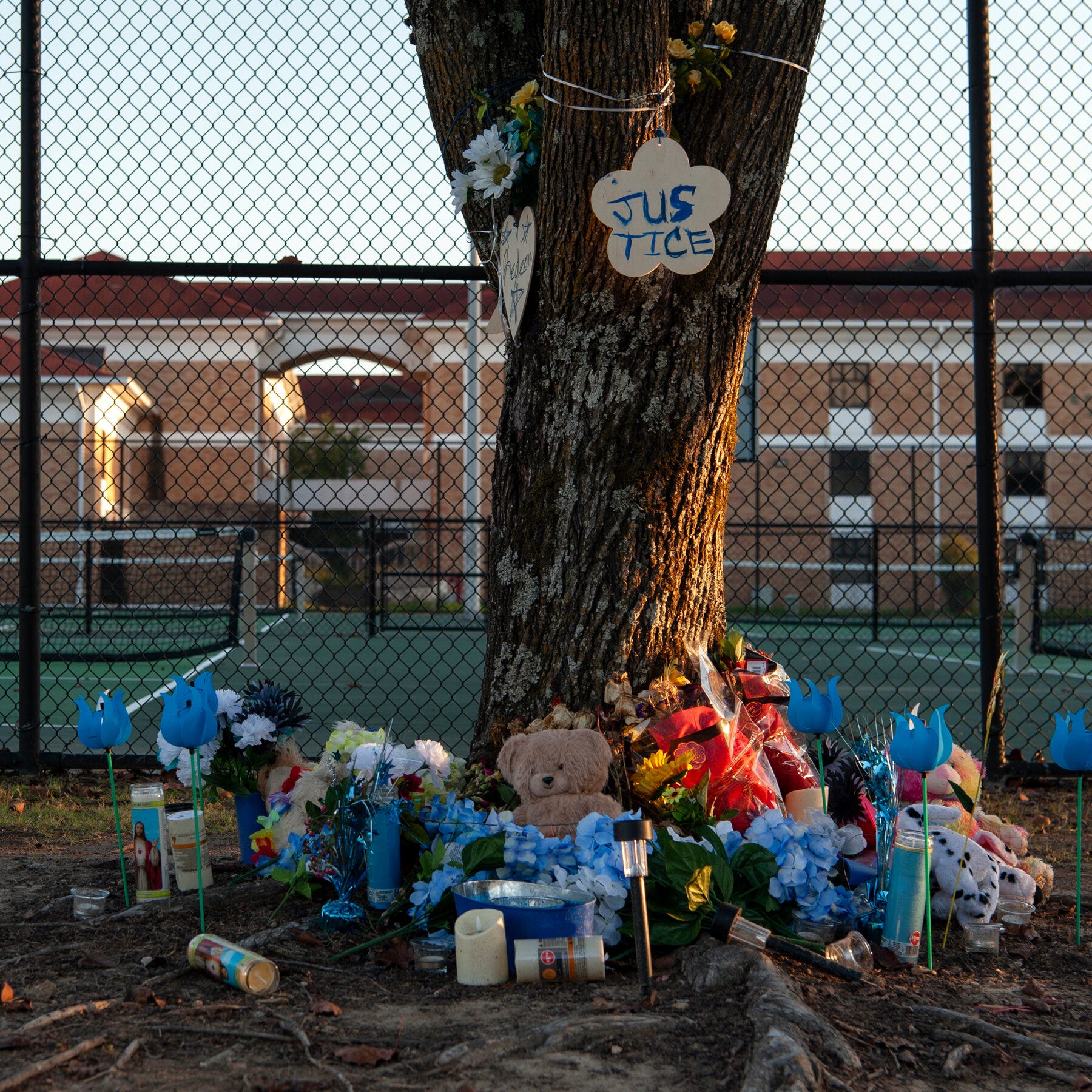
The dispute over Demartravion “Trey” Reed followed the same shape. In September 2025, officials found the 21-year-old Delta State University student hanging from a tree near recreation courts on the Cleveland, Mississippi campus. The Bolivar County coroner and the Mississippi medical examiner both concluded suicide and found no injuries consistent with an assault. Attorney Ben Crump and Colin Kaepernick’s Know Your Rights Camp arranged a second autopsy for the family. Activists working with the family told the Chicago Crusader that the second examination found blunt force trauma to the back of Reed’s head. No one has released that report publicly, and Snopes could not verify the claim. Delta State police turned their files over to the FBI and the United States Attorney’s Office for review.
Coroners Left Killings Unsolved
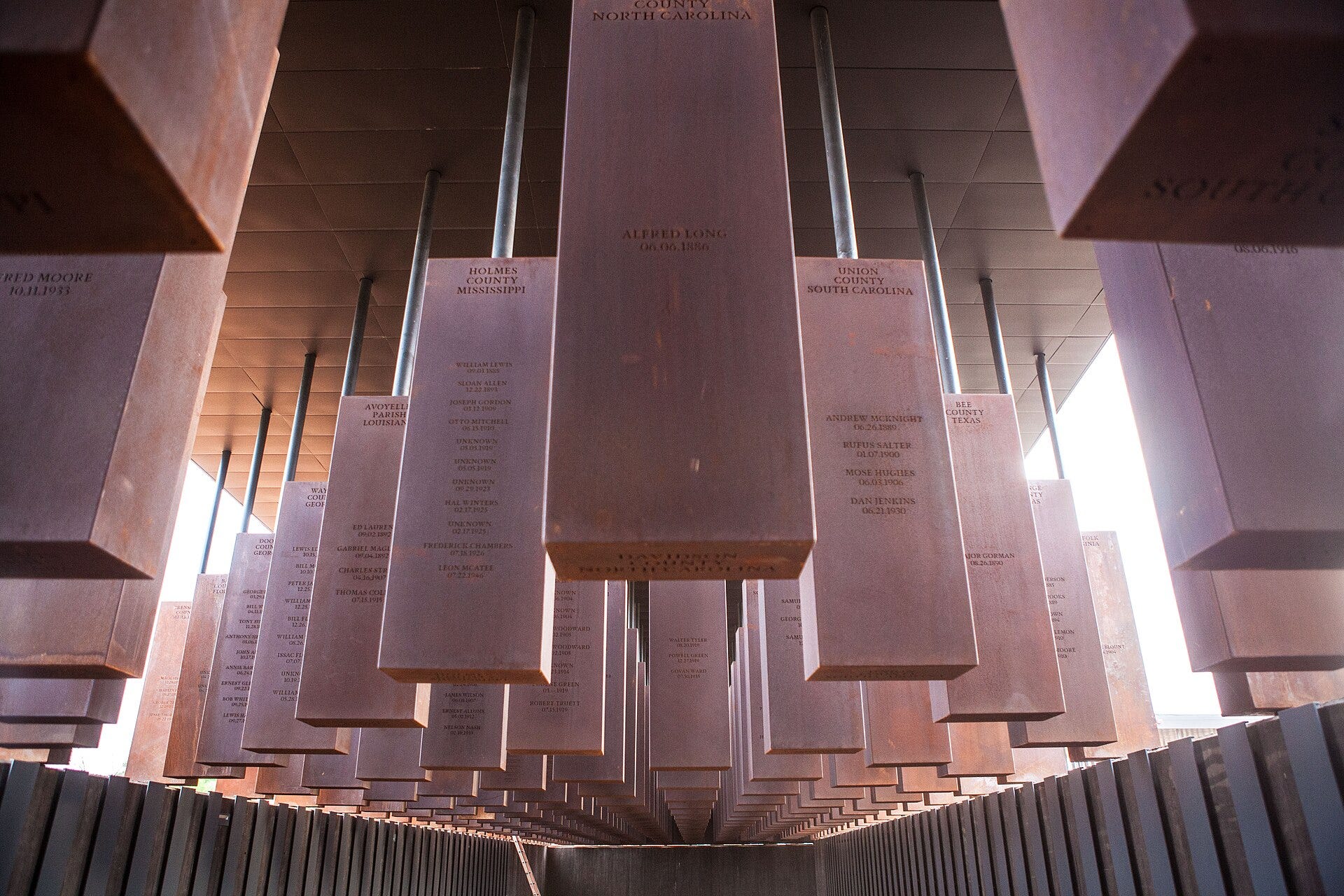
Between 1877 and 1950, white Americans lynched at least 4,400 Black people, according to the Equal Justice Initiative, which documented roughly 2,000 more killings during Reconstruction. Local officials rarely identified anyone. White residents closed ranks around the men who committed the killings, and coroner’s juries returned findings that named no one.
Matthew Williams shows how the process worked. On December 4, 1931, in Salisbury, Maryland, someone shot Williams, a 23-year-old Black man, and his white employer, Daniel Elliott, at Elliott’s lumberyard. State’s Attorney Murray Phillips and the local press said Williams shot Elliott and then shot himself. Black and white residents gave a competing account, later documented by legal scholar Sherrilyn Ifill in On the Courthouse Lawn, holding that Elliott’s son James shot both men over money he owed Williams and invented the story. That evening, a crowd of white men gathered around the courthouse square, marched to Peninsula General Hospital where Williams lay with a bullet wound to the head, and took him from a side door after a nurse let them in. They threw him from a first-floor window, dragged him several blocks, stabbed him with an ice pick, and hanged him from a tree on the Wicomico County courthouse lawn. They then dragged his body to the Wicomico River bridge, doused it with gasoline, and set it on fire. Townspeople cut the rope into pieces and kept them.
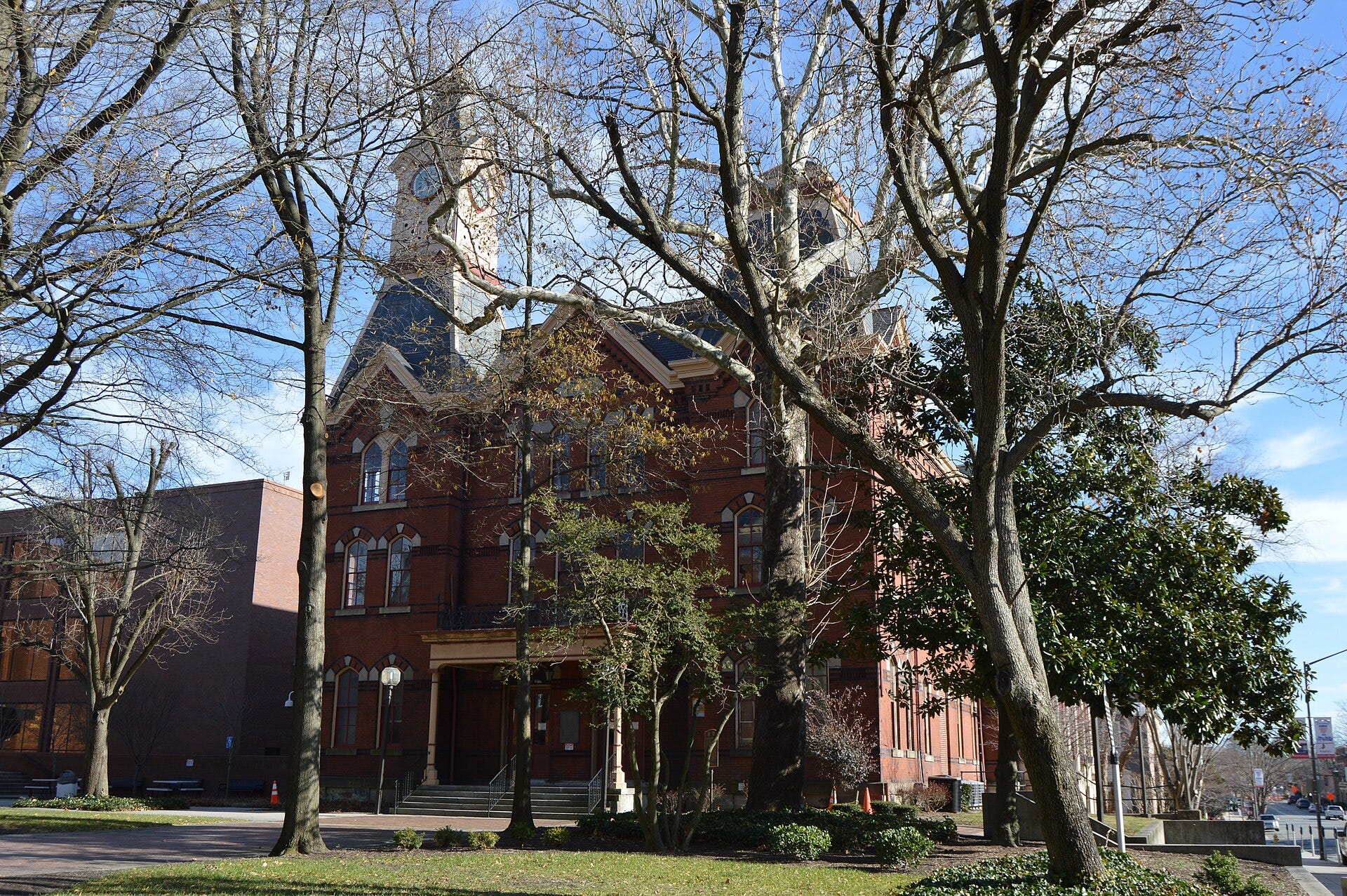
Thousands of white residents knew what happened. No one went to prison. Photojournalist Paul S. Henderson, who covered the lynching for the Baltimore Afro-American, collected a piece of the rope, which now sits in the National Museum of African American History and Culture.
Congress Refused to Act
Beginning in 1921, the NAACP sponsored federal anti-lynching legislation, starting with the Dyer bill. Southern senators killed it. In 1935, Walter White and Mary McLeod Bethune pressed President Franklin Roosevelt to back the Costigan-Wagner bill, which would have put law enforcement officers on federal trial for failing to protect people in their custody. Southern opposition defeated that bill as well. Congress considered roughly 200 anti-lynching measures over the following decades and passed none of them. In 2005, the Senate formally apologized for that record. President Joe Biden signed the Emmett Till Antilynching Act on March 29, 2022, which made lynching a federal hate crime.
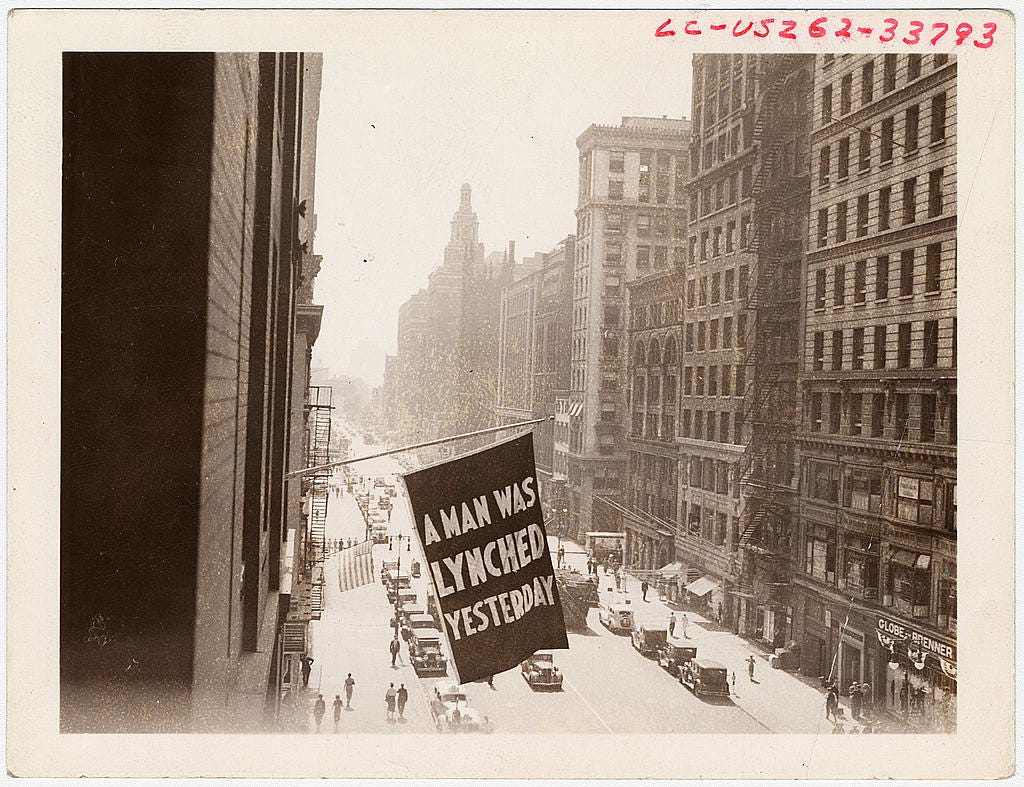
For a century, that meant one thing in practice. County sheriffs, elected coroners, and local prosecutors decided whether a Black person’s death warranted investigation, and they answered to the same white voters who attended the killings.
Communities Weigh the Official Account
That structure survives. County coroners and state medical examiners still classify deaths, and in much of the rural South voters elect coroners who hold no medical training. On February 18, 2026, the civil rights organization JULIAN released A Crimson Record, modeled on Ida B. Wells’s 1895 study A Red Record, documenting more than 70 suspected modern-day lynchings across seven Southern states since 2000, with 20 in Mississippi. In one case JULIAN reexamined, officials found Willie Andrew Jones Jr., a 21-year-old Black man, hanging from a tree in Scott County, Mississippi, in 2018. An independent medical examiner later determined that someone lynched him.
Black families who reject a suicide finding are not making a claim about statistics or about any conspiracy. They are pointing at investigations that ended before they started. Officials who close a hanging death in three days without an autopsy have not proven that no one killed the person. They have only declined to find out.
🚨🚨🚨WAIT🚨🚨🚨
Before you go, help preserve this history of atrocities committed against People of Color!
If you believe that confronting the truth of our past is essential to any claim this country makes toward justice, then I ask for your support.
So many of you have subscribed to this newsletter.
But less than 5% of you are paid supporters.
That makes it hard to keep this going, especially when platforms like TikTok and Instagram are so unstable. I’ve had videos removed, been mass-reported by trolls, and constantly worry about getting shadowbanned or banned completely.
This newsletter is one of the only spaces where I can share these stories without censorship. But I need help to grow it.
📖 If just 5% of you became paid subscribers, I could continue bringing on professors, historians, and other experts to unpack these issues in even deeper ways.
🧠 If 10% signed up, I could quit everything else and go full-time — publishing multiple articles a day, covering the latest news, and connecting it to the hidden histories they don’t teach in school.
🌎 And if 20% of you subscribed, I could turn this into a platform that lifts up other truth-tellers. Young writers, educators, and creators who are brilliant but have nowhere to share their voices. Especially those from marginalized communities who get ignored by traditional media.
I’m going to be direct: You might think someone else will step up to contribute to this page, but that’s exactly what everyone else is thinking too. This only works if each one of us contributes what we can, which is just the cost of a coffee each month.

If you’re having trouble upgrading your subscription with the above link, visit historycanthide.substack.com/subscribe
Addition: Some of you preferred a one-time donation over a full subscription. To do that you can “tip” me on Venmo (TheGenZHistorian), PayPal (@kahlilgreene2), or Cashapp ($kahlilgreene00).
References
“NC Man’s Hanging Death in Downtown Raleigh Being Investigated as a Suicide, Police Say.” WTVD-TV, August 18, 2026.
“Black Man Found Hanging from Tree near Raleigh Caribbean Festival.” The North Carolina Beat, August 2026.
Ginther, Mary. “’Deeply Disturbing’: Police Investigating Black Man’s Hanging as a Suicide, Leaving Leaders Demanding to Know What Really Happened.” Atlanta Black Star, August 17, 2026.
“Family and Community Question Suicide Ruling in Death of Black Teen Found Hanged in Charlotte.” TheGrio, July 27, 2026.
“Death of 16-Year-Old Black Teen Found Hanged near a Tree Ruled Suicide.” BlackNews.com, July 2026.
“Committee Questions Police Investigation into Death of Teen Found Hanging at Charlotte Church.” WBTV, July 31, 2026.
Beveridge, Lici. “Tree Hanging Death at Delta State University Raises Dread of Mississippi’s Past Lynchings.” The Marshall Project, November 4, 2025.
“Questions Linger about Second Autopsy in Mississippi Lynching Death.” Chicago Crusader, October 2025.
“Inspecting Claims Trey Reed’s 2nd Autopsy Shows Blunt Force Trauma.” Snopes, October 8, 2025.
“Family Awaits Results of Independent Autopsy on Delta State Student Trey Reed.” Mississippi Today, October 24, 2025.
Equal Justice Initiative. Reconstruction in America: Racial Violence after the Civil War, 1865–1876. Montgomery, AL: Equal Justice Initiative, 2020.
“Lynching in America.” American Experience, PBS.
Salahu-Din, Tulani. “The Evidence of Things Unsaid: The Lynching of Matthew Williams, 1931.” National Museum of African American History and Culture, July 6, 2017.
Ifill, Sherrilyn A. On the Courthouse Lawn: Confronting the Legacy of Lynching in the Twenty-First Century. Boston: Beacon Press, 2007.
JULIAN. A Crimson Record: Seven State Modern-Day Lynching Report 2000–2025. 2026.
“’A Crimson Record’ Exposes over 70 Modern-Day Lynchings across the South.” EURweb, February 19, 2026.
I had no idea you could be a medical examiner with no medical training. I assumed it was just a specialty in medicine, not an elected office that anyone could just go for?? That's ridiculous. A layperson is supposed to know the human body well enough to know when someone has signs of harm done by themselves or others? A natural vs expected death?
I was already suspicious of all of these deaths (who has ever hanged themself outside? Truly when?) being a coroner who's on the take, but they literally aren't qualified at all???
Even I as a white man know this is wrong. A black man may have reason to commit suicide, but whites more frequently do so. But by hanging given the history of lynchings? Not a chance.
In 2024, the overall U.S. suicide death rate was 13.7 per 100,000, with rates for Black people (9 per 100,000) and White people (about 13–14 per 100,000)